

PIR / PU Insulated Panels & Refrigeration
Complete cold storage construction — panel supply, installation, refrigeration systems, and commissioning across the Philippines.
What Are PIR / PU Insulated Panels?
Polyisocyanurate (PIR) and Polyurethane (PU) insulated panels are factory-manufactured sandwich panels consisting of two rigid metal facings — typically pre-painted galvanized steel or stainless steel — bonded to a rigid foam core. The core provides exceptional thermal insulation, structural rigidity, and fire performance in a single, lightweight panel.
PIR panels are the industry standard for cold storage construction in the Philippines. They are used to build the walls, ceilings, and floors of cold rooms, blast freezers, chiller rooms, and controlled-atmosphere warehouses — anywhere a thermally sealed, hygienic enclosure is required.
Circa Industrial Services supplies and installs PIR/PU insulated panel systems for cold storage facilities, food processing plants, pharmaceutical warehouses, and commercial refrigeration projects across the Philippines.
Technical Specifications
- Core material
- PIR (Polyisocyanurate) or PU (Polyurethane)
- Panel thickness
- 50 mm / 75 mm / 100 mm / 150 mm / 200 mm
- Facing material
- Pre-painted galvanized steel (PPGI) or stainless steel
- Thermal conductivity (λ)
- 0.022–0.024 W/m·K
- Density (core)
- 40–48 kg/m³
- Operating temperature range
- -40°C to +120°C
- Fire classification
- B2 (standard) / B1 (fire-retardant grade)
- Joint system
- Tongue-and-groove cam-lock
- Panel width
- 1,000 mm (standard)
- Panel length
- Custom cut to project requirement
PIR vs PU: Which Core Is Right for Your Project?
Polyisocyanurate (PIR)
PIR foam has a higher isocyanate index than standard PU, resulting in a more thermally stable, fire-resistant core. It is the preferred choice for most commercial cold storage and food-grade applications due to its superior fire performance and long-term thermal stability.
- Better fire resistance — self-extinguishing
- Lower thermal conductivity (better insulation per mm)
- Higher temperature stability up to +120°C
- Preferred for food-grade and pharmaceutical cold rooms
- Meets international fire standards (EN 13501)
Polyurethane (PU)
Standard PU foam panels offer excellent insulation at a lower cost point. They are well-suited for ambient-temperature controlled rooms, commercial refrigeration enclosures, and applications where fire classification requirements are less stringent.
- Cost-effective for standard cold room applications
- Good insulation performance (λ ≈ 0.024 W/m·K)
- Suitable for chiller rooms (+2°C to +8°C)
- Widely available in standard thicknesses
- Ideal for commercial kitchens and food retail
Why PIR Panels Are the Cold Storage Standard
Exceptional thermal performance
PIR foam achieves a thermal conductivity of 0.022–0.024 W/m·K — among the lowest of any rigid insulation material. This minimizes heat gain, reduces refrigeration load, and lowers operating energy costs over the facility's lifetime.
Seamless, hygienic enclosure
The tongue-and-groove cam-lock joint system creates a continuous, airtight seal between panels with no exposed fasteners on the interior face. The smooth steel facing is easy to clean, resistant to mold and bacteria, and compliant with food-grade hygiene standards.
Structural self-support
PIR sandwich panels are structurally self-supporting across standard spans, eliminating the need for a separate internal steel framework in most cold room configurations. This reduces construction time and cost.
Fast, dry construction
Panel systems are prefabricated to project dimensions and assembled on site using mechanical cam-lock connectors. There is no wet work, no curing time, and no waiting — a cold room can be assembled and commissioned in days, not weeks.
Modular and expandable
Cold rooms built with panel systems can be expanded, reconfigured, or relocated as operational requirements change. Panels can be disassembled and reused, making the system a long-term asset rather than a fixed structure.
Vapor barrier integrity
The continuous metal facing on both sides of the panel acts as an integral vapor barrier, preventing moisture migration into the insulation core — a critical requirement in the humid Philippine climate where condensation and ice formation inside walls can destroy conventional insulation.
Panel Thickness Selection Guide
Selecting the correct panel thickness is critical for energy efficiency and maintaining the required internal temperature. The table below provides general guidance for common cold storage applications in the Philippine climate.
| Application | Temperature Range | Wall Thickness | Ceiling Thickness | Floor Thickness |
|---|---|---|---|---|
| Chiller / Produce room | +2°C to +8°C | 75–100 mm | 100 mm | 100 mm |
| Blast chiller | 0°C to +2°C | 100 mm | 100–150 mm | 100 mm |
| Freezer room | -18°C to -22°C | 150 mm | 150–200 mm | 150 mm |
| Blast freezer | -35°C to -40°C | 200 mm | 200 mm | 200 mm |
| Controlled atmosphere (CA) store | 0°C to +4°C | 100–150 mm | 150 mm | 100 mm |
Cold Storage Applications

Blast freezers
Rapid pull-down to -35°C to -40°C for seafood, meat, and ready-to-eat products. Requires 200 mm panels with reinforced floor panels rated for forklift loads.

Chiller & produce rooms
Controlled temperature storage for fresh produce, dairy, and beverages at +2°C to +8°C. 75–100 mm panels with stainless steel facing for high-humidity environments.
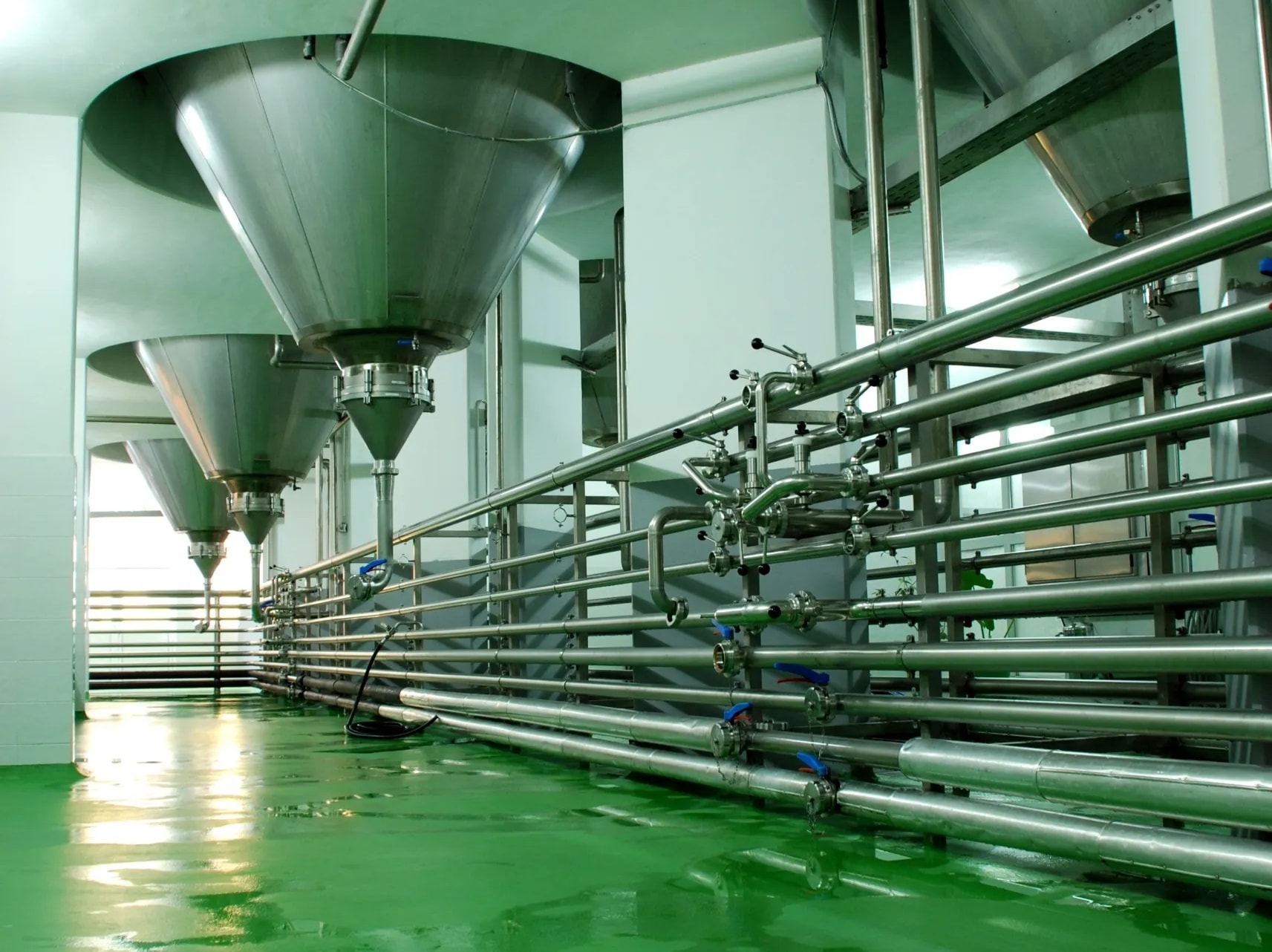
Food processing cold rooms
Hygienic enclosures for meat processing, fish handling, and ready-meal production. Stainless steel facing, coved corners, and seamless floor-to-wall junctions for HACCP compliance.

Pharmaceutical cold storage
Temperature-controlled storage for vaccines, biologics, and temperature-sensitive medicines at +2°C to +8°C or -20°C. Validated enclosures with continuous temperature monitoring.

Controlled atmosphere (CA) warehouses
Modified atmosphere storage for fresh fruit and vegetables. Airtight panel construction with gas-tight sealing at all joints and penetrations.

Commercial refrigeration rooms
Walk-in coolers and freezers for supermarkets, restaurants, hotels, and food service operations. Modular panel systems sized to fit existing building footprints.
Refrigeration Systems: Completing the Cold Chain
A PIR panel enclosure is only half of a cold storage facility. The refrigeration system — condensing unit, evaporator coils, expansion valves, and controls — must be correctly sized and matched to the panel specification to achieve and maintain the target temperature efficiently.
Circa Industrial Services works with certified refrigeration engineers to specify and install complete refrigeration systems alongside our panel installations. We coordinate the mechanical and civil works so that the cold room is commissioned as a complete, tested system — not just a shell.
Condensing units
Air-cooled or water-cooled condensing units sized to the room volume, target temperature, and product load. Brands include Copeland, Bitzer, Embraco, and Tecumseh.
Evaporator coils
Unit coolers and evaporator coils selected for the required air distribution pattern, defrost cycle, and humidity control. Ceiling-mounted or wall-mounted configurations.
Expansion valves & controls
Electronic expansion valves (EEV) and digital controllers for precise temperature regulation, defrost scheduling, and alarm monitoring. Remote monitoring via GSM or LAN.
Refrigerants
R404A, R448A, R449A (HFO blends), and R290 (propane) natural refrigerant systems. We specify low-GWP refrigerants aligned with Philippine and international environmental regulations.
Cold room doors
Hinged and sliding cold room doors with heated frames, magnetic gaskets, and safety release mechanisms. Rapid-roll doors for high-traffic freezer applications.
Temperature monitoring
Continuous temperature data logging with alarm outputs, cloud-based monitoring dashboards, and calibration certificates for regulatory compliance (FDA, BFAD, HACCP).
PIR Panels vs. Conventional Cold Room Construction
Traditional brick-and-mortar cold rooms with spray foam insulation cannot match the performance, hygiene, or speed of a modern PIR panel system.
| Property | PIR Panel System | Conventional Construction |
|---|---|---|
| Construction speed | Days to weeks | Weeks to months |
| Thermal performance | Consistent, certified λ value | Variable, degrades over time |
| Vapor barrier | Integral metal facing | Separate membrane, prone to damage |
| Hygiene | Smooth steel, no joints to harbor bacteria | Porous surfaces, grout lines |
| Expandability | Modular — panels can be added or moved | Fixed structure |
| Maintenance | Low — panels are durable and replaceable | High — insulation degrades, walls crack |
Our Installation Process
Site survey & thermal design
We conduct a full site survey and perform thermal load calculations based on room dimensions, target temperature, product load, door frequency, and local ambient conditions. This determines the required panel thickness and refrigeration capacity.
Panel fabrication & supply
Panels are factory-manufactured to project-specific dimensions and delivered to site. We source PIR panels from certified manufacturers with full traceability documentation and thermal performance test certificates.
Civil & substrate preparation
The floor slab is prepared, leveled, and waterproofed. Floor panel installation begins with the correct vapor barrier and anti-condensation measures for the target temperature.
Panel assembly
Wall and ceiling panels are assembled using the cam-lock joint system. All joints are sealed with approved PIR-compatible sealant. Penetrations for pipes, conduits, and services are core-drilled and sealed to maintain vapor barrier integrity.
Refrigeration installation
Condensing units, evaporator coils, pipework, and controls are installed and commissioned by certified refrigeration engineers. Refrigerant charge, superheat, and subcooling are verified against design parameters.
Commissioning & handover
The completed cold room is pulled down to target temperature and held for a minimum 24-hour stability test. Temperature uniformity mapping is performed and documented. Full as-built drawings, equipment manuals, and warranty certificates are provided at handover.
Plan your cold storage facility with Circa Industrial Services
We handle the full scope — PIR panel supply and installation, refrigeration systems, flooring, and commissioning — so you deal with one contractor, not four.
Request a Free AssessmentSchedule an Estimate
For estimates, please contact us at your convenience. We look forward to meeting you soon.
Address
Lot 24 Block 2 Horacio Aquino Street,
Green Valley Subdivision, Barangay San Francisco,
San Pablo City, Laguna, Philippines 4000Mobile
+63 961 577 5115Hours
Monday–Saturday 8AM–5PM
Sunday: Closed